![]() |
||||
|
The situation A lot of audiophiles from all over the world fancy the vintage 12 inch arms from makers like Ortofon and SME. They are able to produce a nice sound, but the level of details is limited. Often the condition of the arms is bad, just think of the 40 years of operation. Loose or worn bearings are the worst for the lifespan of your stylus and record collection. Even if in best condition, the bearings used leave much to be desired. Forty years ago the quality of the bearings was much worse than today. Even if we imagine the rest of the tonearm to be mechanically absolutely rigid, the bearings are the limiting factor. If the tonearm is loose here, all the punch of the music is lost in the movements of the bearing.The needle is supposed to work as generator, creating electrical signals from the movement of the needle. If the arm assembly is able to move against that, it is hardly a good thing. Here is also the problem with most one point desings, they tumble. Often damping is applied that brings more negative influences rather than a cure. One point designs that drown the moving parts in silicone oil are not rigid, they are sticky, unable to react to subtle details. A knife bearing is loose by design. Imagine a knife that is in use for 40 years, the only thing cuttable would be hot butter. The edge of the knife is a scratchy, uneven surface compared to dimensions of the information stored in a LP groove.
Ortofon arms often are sold with the information: "It fits both, SPU-G and SPU-A cartridges." This is sipmly wrong, the socket fits, but the geometry for one will be wrong for the other. SPU-G has SME compatible length, the SPU-A is 22mm shorter. One arm can never match both
left SME, SPU-G type headshell, right SPU-A As a result a pick-up arm has to be made in two versions in order to fit both of the size possibilities.
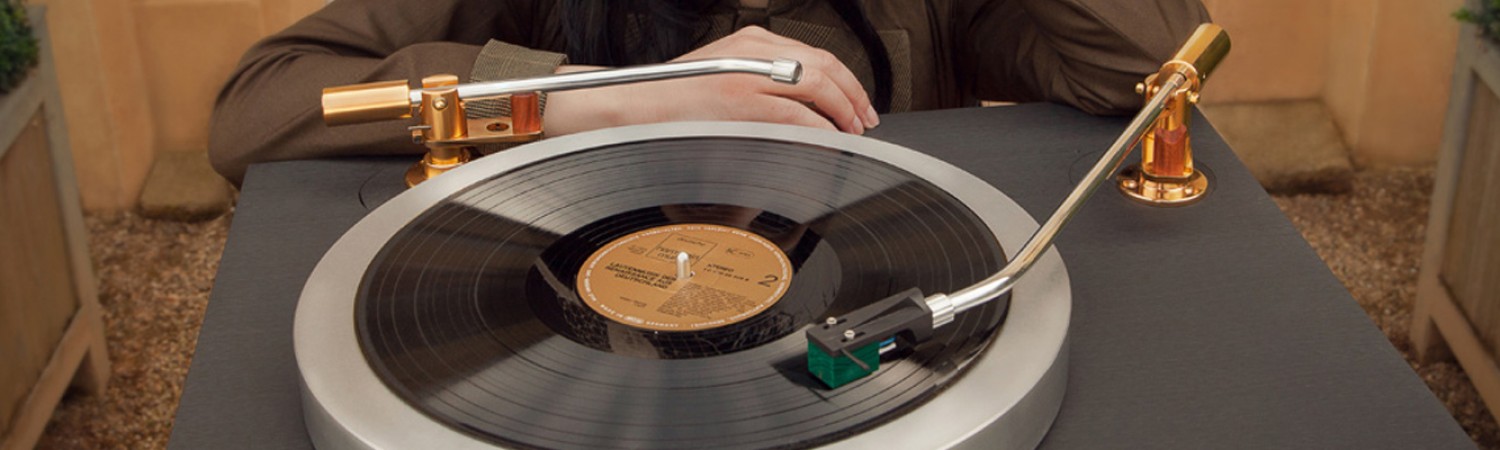
top: Schick arm SME, SPU-G compatible, bottom: Schick arm SPU-A compatible
|
||||