
Main Page & News

Stories

Tonearm pages

Vinyl

Digital

Amps

Speaker

Recording

Links

Legal Notice


Siemens Eurodyn

Siemens produced a lot of products for cinema theaters, most of it under the 'Klangfilm' label.

A setup with three older Eurodyns in a Cinema can be seen here.

The Eurodyn, which is presented here, is the last model ever made (1977). Older versions have one bigger 15" woofer instead of the triple 8" setup and a different horn driver. They are intended to be mounted behind the screen in a large wood panel. This way space behind the projection screen is saved compared to a bass horn construction. The right picture shows a case that was available for them.
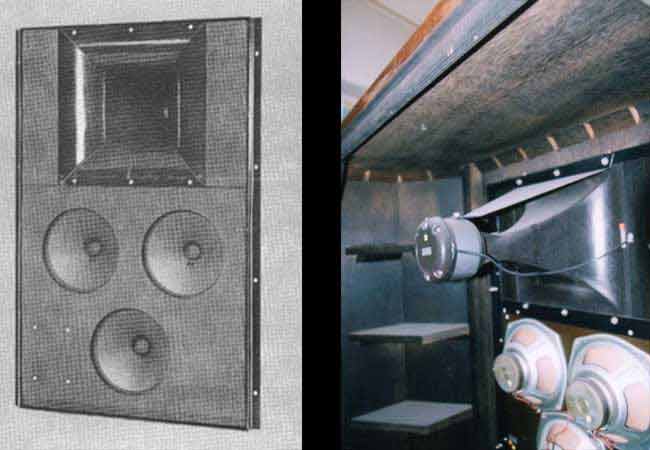

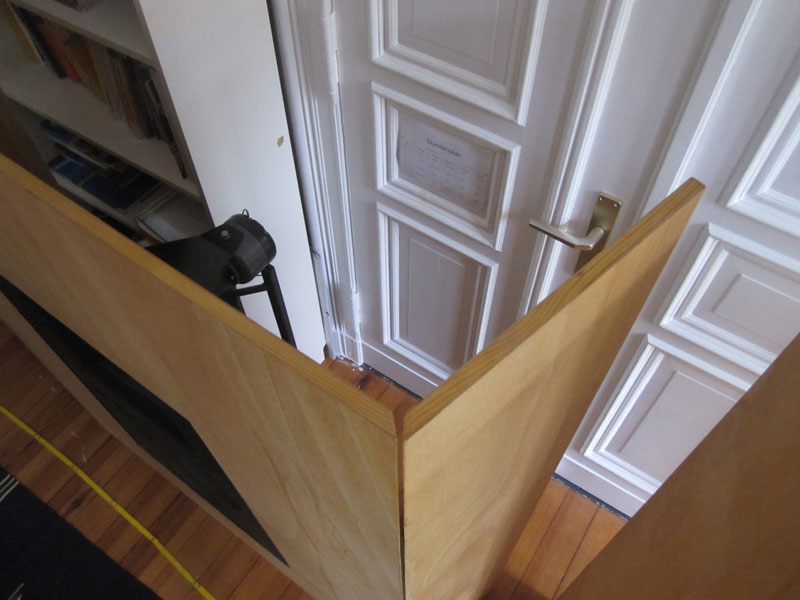
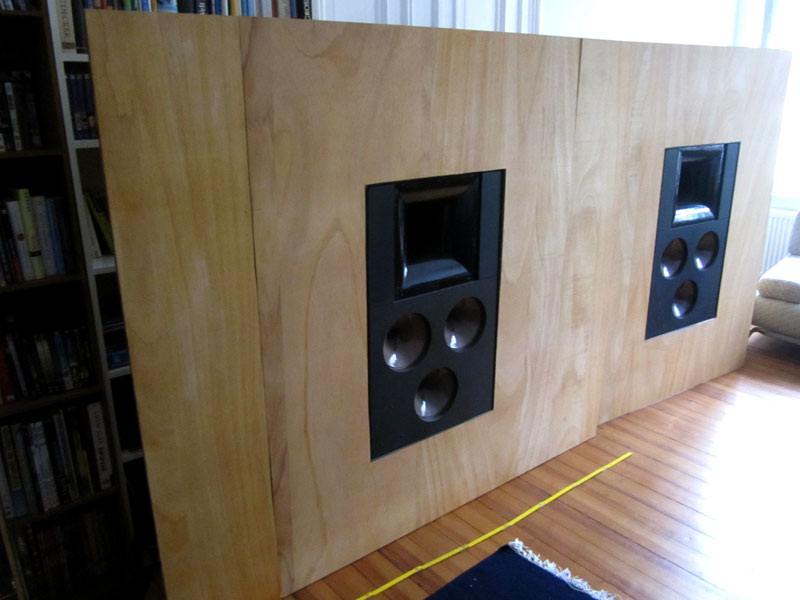
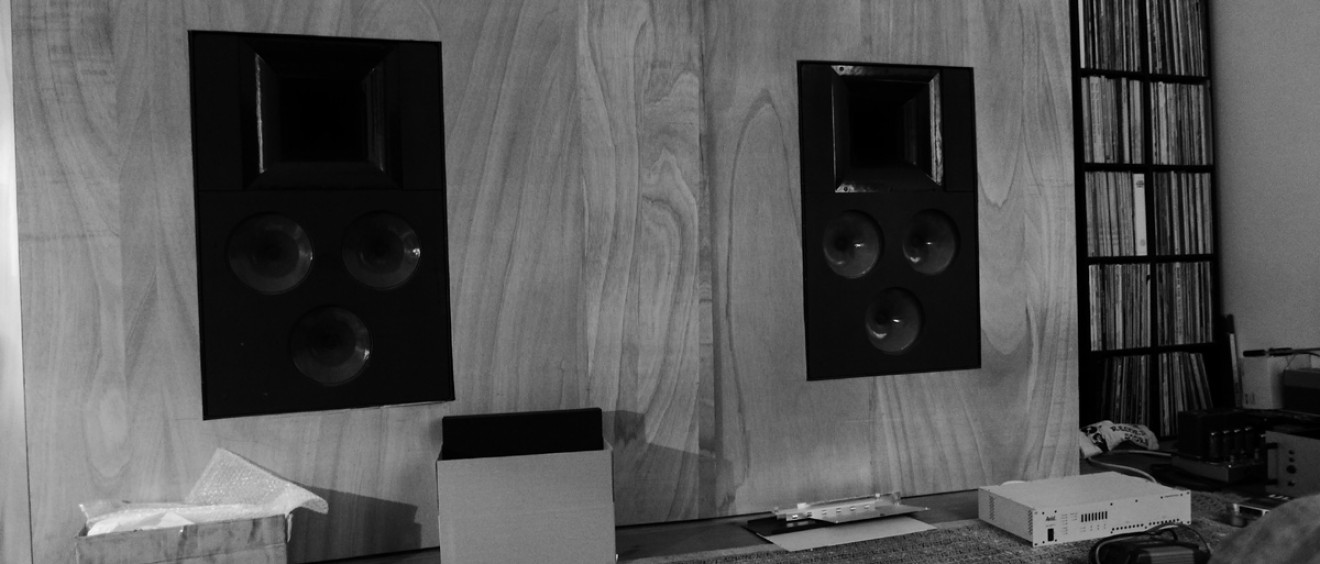
The instruction manual suggests to mount them in a 2 by 2m wooden panel, or directly into the wall. In order to get a room friendly setup I cut the panel size down to 1,6m height by 1,3m width. I used 3mm MDF.

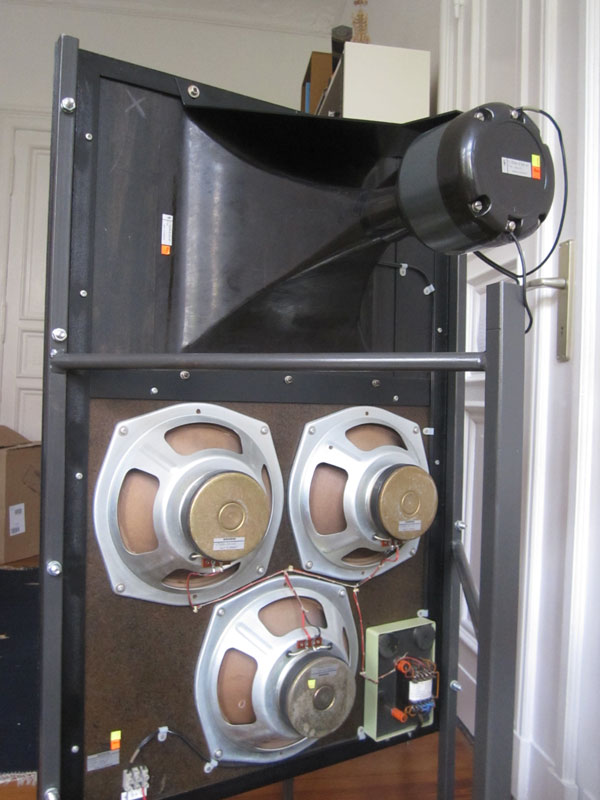
The stability comes from the metal rig screwed to the frameset of the speaker. The wooden panel is just slipped over the outer frame. The panel is not coupled to the speaker this way it does not vibrate very much. The bass does not get smeared by it.

Point with the mouse over the image.

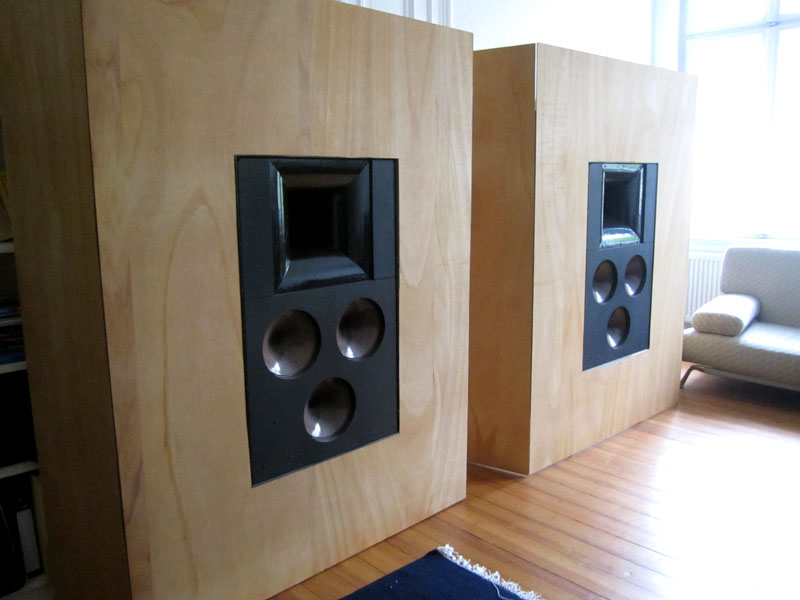
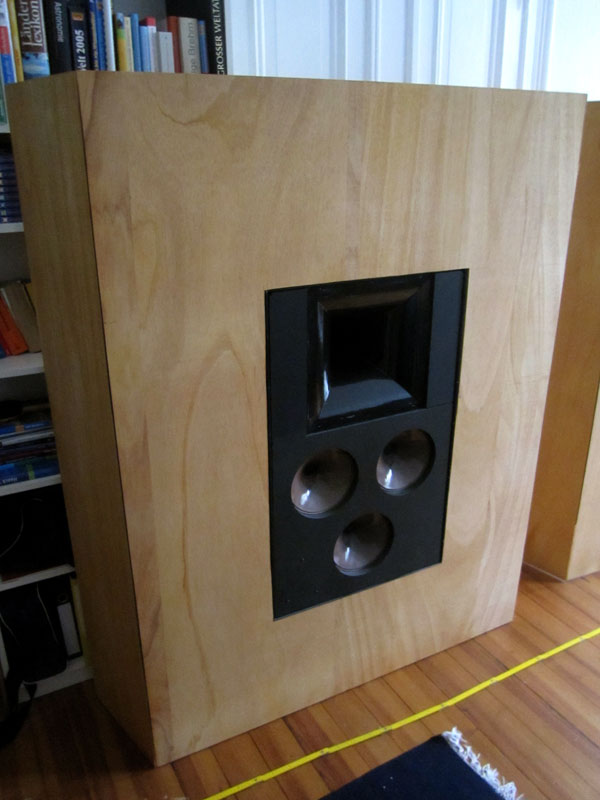
The two legs are on the ground and the tweeter find its stability leaning against the wall. This setup was a first, improvised solution, but it turned out that it sounded better than a stand with a third leg. The left picture shows additional 'flap-panels' for side ount and increase bass performance.

Here is the back side. The transformer in the frequency network matches the impedance of the woofers to 15 Ohms. Just like the horn driver. A very smooth load for the amp. With 104dB/W at 1m it is also a very efficient speaker.

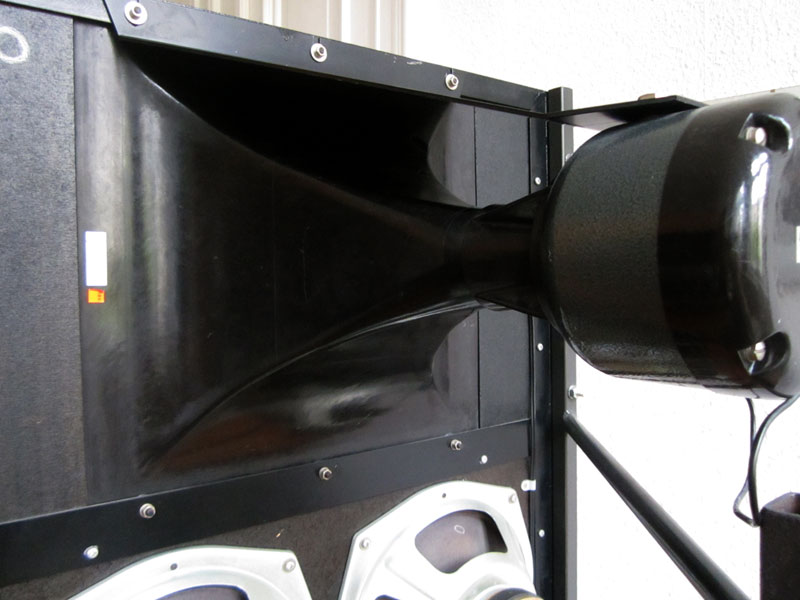
I modified the speakers with C37. The woofers and horn throat were easy to paint. For the tweeter some disassembly was necessary.

A view of the completly mounted driver at the throat of the horn

After removing the back cover the speaker assembly is visible.

The one piece aluminium dome

The compression chamber

Finally a tweak for the back cover. In the original version there was a piece of plastic inserted. This piece was replaced by a piece of pinewood. Also, the construction was supported in the middle by layering square wood slices.


Thomas Schick, Berlin, Germany

Back to Main page